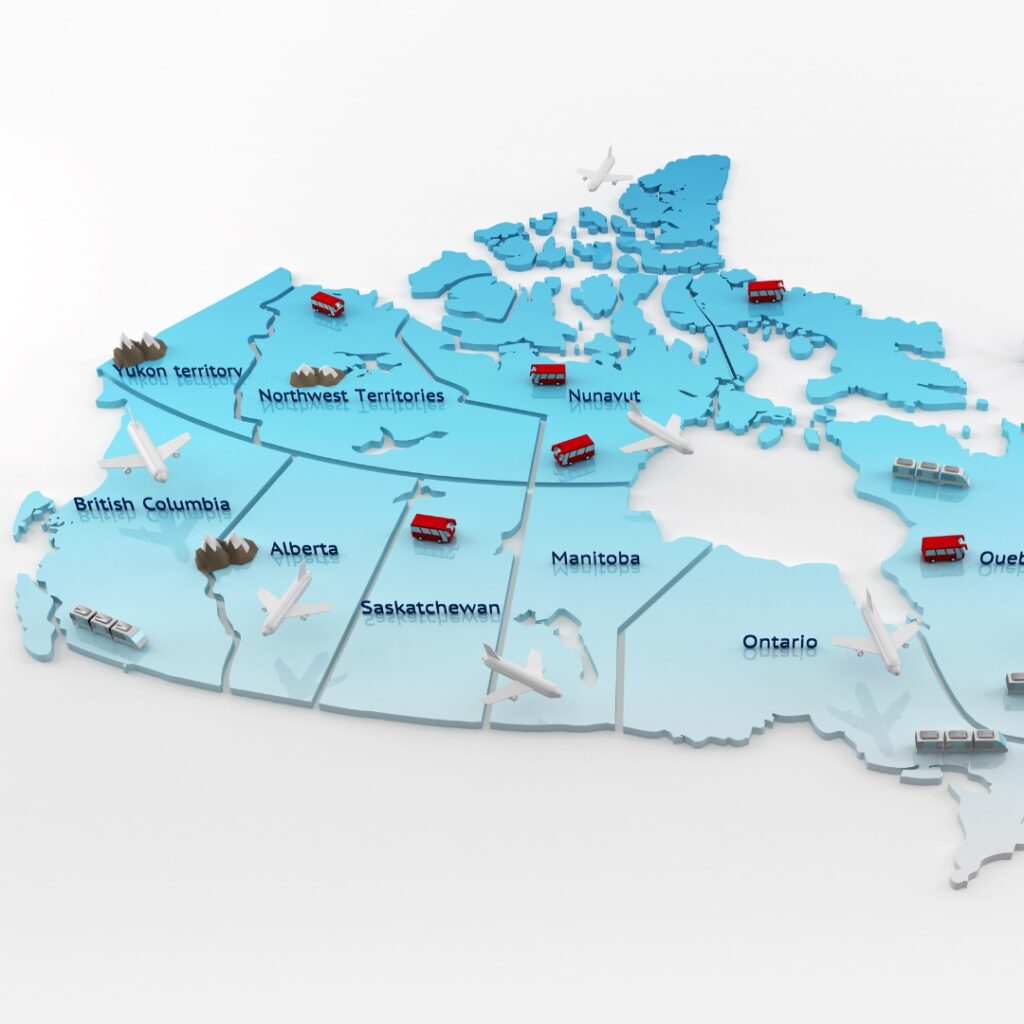
A significant factor that influences the indoor radon levels of residential buildings is the geological source of radon in the ground. The amount of thorium and uranium in the rock and soil determines the amount of radon in a given geographic area. It is essential to note that every home has the potential to have high radon levels, the only way to know your levels is to test.
The 2024 Cross-Canada Radon Report has identified a significant increase in radon exposure across Canadian residential properties. The report reveals nearly 18% of Canadian residential buildings contain radon levels at or exceeding 200 Bq/m³, the threshold at which Health Canada advises action to reduce indoor radon concentrations. This is more than double the 6.9% of households that recorded radon levels at or above this limit just over a decade ago in the 2012 Cross-Canada Radon Report. The average Canadian household radon level is 84.7 Bq/m³, with 17.8% of residential buildings containing radon at or over 200 Bq/m³.
KEY FINDINGS – Residential radon levels for all Canadian regions:
● 1 in 3 Atlantic properties are at or above 200 Bq/m³ (Nova Scotia, New Brunswick, Newfoundland, and Prince Edward Island)
● 1 in 6 Central properties are at or above 200 Bq/m³ (Ontario and Quebec)
● 1 in 5 Prairie and Northwest Territory properties are at or above 200 Bq/m³ (Alberta, Saskatchewan, Manitoba, and the Northwest Territories)
● 1 in 3 Pacific Interior and Yukon Territory properties are at or above 200 Bq/m³ (Interior British Columbia and Yukon Territory)
● 1 in 75 Pacific Coastal Canadian properties are at or above 200 Bq/m³ (British Columbia Coast, Lower Mainland, and Vancouver Island)
The Cross Canada Radon Survey is a comprehensive national study conducted to assess radon levels in Canadian residential properties. The survey aims to provide data that informs public health initiatives and policies to reduce radon exposure and its associated health risks.
The report was funded by the Canadian Institutes of Health Research Healthy Cities Research Initiative, Health Canada, the Alberta Real Estate Foundation and the Canadian Cancer Society.
Read the Report